Summary: Learn how to keep rodents out of your car with five practical steps, including removing food, choosing safer parking areas, using deterrents, sealing entry points, and driving regularly. Discover common rodent damage, warning signs, DIY prevention methods, and when professional rodent-proof detailing, engine cleaning, and mold removal can help restore your vehicle.
Rodents can turn a parked car into a warm, hidden shelter, especially when temperatures drop. Mice and rats may build nests under the hood, chew wiring, or leave droppings and nesting material behind. Knowing how to keep rodents out of your car can help prevent expensive repairs and unpleasant odors. Simple habits such as removing food, parking strategically, using deterrents, sealing entry points, and driving regularly can reduce the risk.
If rodents have already entered your vehicle, however, prevention alone may not be enough. A thorough inspection and professional cleaning can help remove the contamination and nesting material they leave behind.
Rodent Attractants
Rodents are attracted to cars for several reasons. Your vehicle can provide warmth, shelter, food smells, and protection from weather and predators.
|
Rodent Attractant |
Why It Attracts Rodents |
|
Food wrappers |
Food odors can attract mice and rats |
|
Pet food |
Leftover food provides an easy source of nourishment |
|
Crumbs |
Small food particles can remain hidden inside the cabin |
|
Warm engine bay |
A recently driven engine provides warmth and shelter |
|
Parked vehicles |
Cars that remain stationary for long periods can become nesting spots |
| Leaf piles and debris |
Nearby organic material can provide nesting material |
Removing these attractants is one of the simplest ways to make your vehicle less appealing to rodents.
How to Keep Rodents Out of Your Engine Bay — 5 Steps
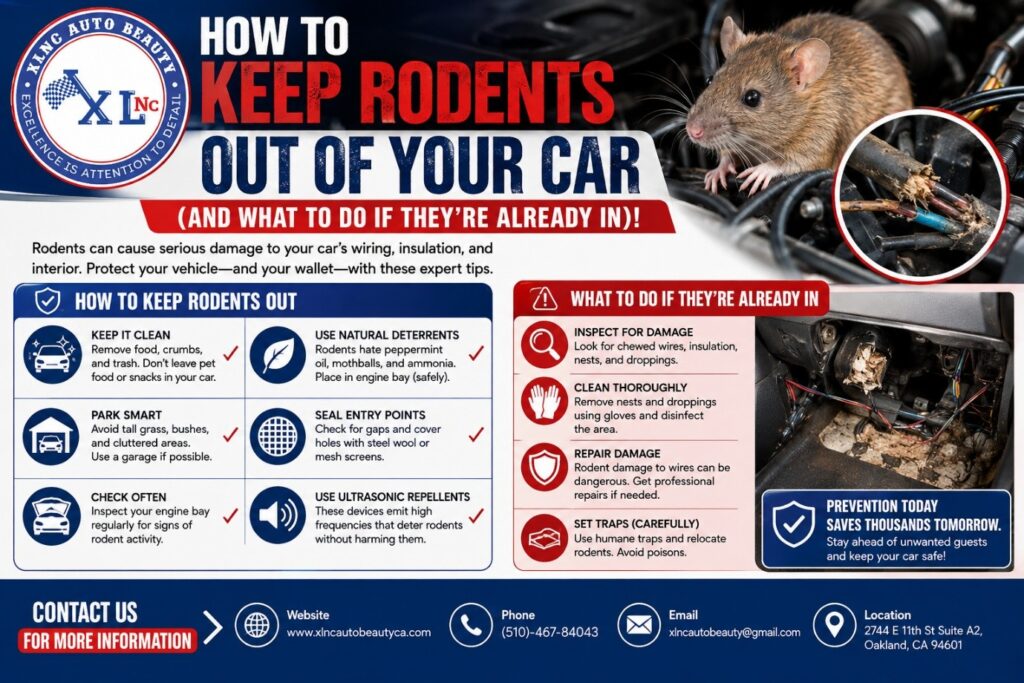
If you want to keep mice out of car engine areas, focus on removing food sources, reducing shelter, and making access more difficult.
- Remove food, wrappers, and pet food from the car and trunk
Never leave snacks, food packaging, crumbs, or pet food inside your vehicle. Check under seats and in the trunk because even small food particles can create an attractive scent. - Park in a well-lit area or, if possible, indoors
Rodents generally prefer dark, quiet, protected spaces. When possible, park in a well-lit location or inside a garage. Avoid parking directly beside piles of leaves, tall grass, wood piles, or accumulated debris. - Use a deterrent scent around the engine bay
Some vehicle owners use peppermint oil or dryer sheets as a temporary deterrent. These may help make the area less appealing, but they are not guaranteed solutions. A rodent repellant for cars should be treated as one part of a broader prevention strategy. - Seal obvious entry gaps with wire mesh or rodent-deterrent tape
Inspect accessible areas for obvious openings where rodents may enter. Wire mesh or purpose-made rodent-deterrent tape can help block suitable gaps. Avoid covering vents, drainage points, belts, moving components, or areas that require airflow. - Drive the car regularly
Rodents prefer quiet, undisturbed areas. Regularly driving your vehicle can make the engine bay less attractive as a long-term nesting location. If your car sits unused for extended periods, inspect it before driving.
These steps can lower the chance of an infestation, but they cannot guarantee that rodents will stay away. If you notice droppings, nesting material, unusual smells, or damaged wiring, investigate before assuming the problem is gone.
What Does Rodent Damage Look Like?
One of the biggest concerns is rodent damage car engine components. Mice and rats can chew electrical wiring, insulation, hoses, and other materials. Damage may range from warning lights and electrical problems to difficult starting or more serious mechanical issues.
Watch for the following signs of rodents in car areas:
- Droppings under the hood or inside the cabin
- Shredded paper, fabric, leaves, or insulation
- Nesting material near the engine
- Chewed wires or insulation
- Unusual smells coming from the vents
- Scratching or movement sounds
- Food remnants or stored food in unusual locations
- Warning lights or unexplained electrical problems
If you notice signs of an infestation, avoid disturbing a nest unnecessarily. Rodent waste and nesting material can contaminate the vehicle, and damaged wiring may create additional safety concerns.
Common Triggers
Certain habits and surroundings can make a vehicle more attractive to rodents. Understanding these triggers can make it easier to prevent rats in car engine areas.
Common triggers include:
- Leaving food or wrappers inside the vehicle
- Storing pet food in the trunk
- Parking near garbage or food waste
- Leaving a vehicle stationary for long periods
- Parking near tall grass or dense vegetation
- Parking close to wood piles or debris
- Allowing leaves and organic material to accumulate around the vehicle
- Keeping the engine bay undisturbed for extended periods
Reducing these conditions does not make a vehicle completely rodent-proof, but it can remove some of the easiest reasons for rodents to investigate it.
DIY Deterrents vs. Professional Rodent-Proof Detailing
DIY deterrents can be useful for prevention, particularly when you are trying to make your vehicle less attractive to rodents. Cleaning out food, improving parking conditions, using temporary scents, and blocking obvious openings can all help.
However, prevention methods have limitations. Peppermint oil, dryer sheets, and similar deterrents cannot remove nesting material that is already hidden inside the vehicle. They also cannot clean contamination left behind by rodents or address every hard-to-reach area.
This is where rodent-proof detailing can close the gap. Professional service can focus on areas that are difficult to inspect and clean yourself. Depending on the condition of the vehicle, this may include engine bay detailing, interior cleaning, removal of nesting debris, and odor treatment.
If rodents have already been inside the vehicle, professional cleaning can be a more practical next step than repeatedly trying household deterrents.
How Detailing Helps Prevent Rodent Problems
Regular detailing does more than improve the appearance of your vehicle. A clean engine bay and interior can make it easier to spot early signs of rodent activity.
During cleaning, technicians can identify accumulated debris, food residue, nesting material, and other conditions that may otherwise go unnoticed. Removing these materials also reduces potential food and nesting sources.
Engine bay cleaning is particularly useful because leaves, dirt, and other debris can accumulate in areas that are difficult to see during a normal car wash. Professional engine bay detailing can help keep these areas cleaner while making future inspections easier.
If rodent activity has caused moisture problems, contamination, or organic buildup, additional services such as mold removal may also be necessary. The appropriate treatment depends on what is found during inspection.
What to Do If Rodents Are Already Inside Your Car
If you find evidence of rodents, do not simply cover the signs with an air freshener or place a deterrent under the hood. First, identify whether there is an active infestation and check for visible damage.
Look carefully for:
- Nests
- Droppings
- Chewed wiring
- Damaged insulation
- Strong or unusual odors
- Contaminated carpeting or upholstery
If wiring or other vehicle components appear damaged, have the vehicle inspected by a qualified automotive professional before continued use.
Once the mechanical condition has been addressed, thorough cleaning can help remove remaining debris and odors. Professional detailing is particularly useful when contamination has reached difficult-to-access areas.
For local vehicle owners, car detailing Oakland services can provide a practical option when DIY cleaning is no longer enough.
When Should You Choose Professional Rodent Abatement?
Professional treatment makes sense when there is clear evidence that rodents have already occupied the vehicle or when contamination extends beyond easily accessible areas.
Consider professional help if:
- You find a nest inside the engine bay or cabin.
- Rodent droppings are present throughout the vehicle.
- There is a persistent odor after basic cleaning.
- Wiring or insulation appears chewed.
- Nesting material is located in difficult-to-reach areas.
- You are unsure how extensive the contamination is.
- DIY deterrents have not solved the problem.
The goal is not simply to make the vehicle smell better. The affected areas need to be properly cleaned and the underlying source of the contamination addressed.
Prevent Rodent Problems Before They Become Expensive
Keeping food out of your vehicle, parking thoughtfully, using temporary deterrents, sealing suitable entry points, and driving regularly can all help reduce rodent activity. These simple steps are especially useful for vehicles that spend long periods parked.
But once rodents have nested inside, prevention is only part of the solution. Nests, droppings, odors, and contaminated materials need appropriate attention, while any mechanical or electrical damage should be evaluated separately.
XLNC Auto Beauty provides professional rodent-abatement and detailing services to help restore affected vehicles and reduce the problems caused by rodent activity.
Book rodent abatement today and give your vehicle a thorough professional clean before a small rodent problem becomes a costly one. We are available via mail – xlncautobeauty@gmail.com and call at (510)-467-8404!
FAQ
1. What attracts rodents to a car?
Food crumbs, pet food, wrappers, warmth, nesting materials, nearby vegetation, and long periods of inactivity can make a car attractive to mice and rats.
2. Can rodents damage a car engine?
Yes. Rodents can chew wiring, insulation, hoses, and other components, potentially causing electrical problems, warning lights, starting issues, and expensive repairs.
3. Does peppermint oil keep rodents away from cars?
Peppermint oil may temporarily discourage rodents because of its strong scent, but it is not a guaranteed solution for preventing or removing an infestation.
4. How can I tell if rodents are inside my car?
Common signs include droppings, nests, shredded materials, chewed wiring, unusual odors, scratching sounds, and food remnants around the engine bay or cabin.
5. When should I choose professional rodent detailing?
Professional detailing is recommended when you find nesting material, persistent odors, widespread contamination, or rodent damage in areas that are difficult to clean yourself.