Summary: This blog explains how professional detailers remove embedded sand, dust, and pollen from vehicle interiors using compressed air, detailing brushes, steam cleaners, extraction machines, microfiber systems, and specialized chemicals. It highlights why professional interior detailing protects materials, improves cabin air quality, extends vehicle life, and delivers results that routine cleaning cannot achieve.
You vacuum your car every weekend, yet fine sand still hides under the seats. Dust settles back within days. Pollen clings to every surface. That is where car deep cleaning by trained detailers makes the real difference.
A quick vacuum removes loose dirt. It cannot lift particles buried inside carpets, seat fabric, air vents, or stitching. Sand acts like fine sandpaper. Dust keeps circulating through the cabin. Pollen can trigger allergies every time you drive. Professional detailing solves these hidden problems with advanced tools, proven techniques, and the right cleaning chemistry.
Why Do Sand, Dust, and Pollen Stay Inside Your Vehicle?
Your car works like a moving air filter. Every time you open a door or window, tiny particles enter the cabin. Shoes bring in sand. Clothing carries dust. Air vents pull pollen inside during every drive.
The real challenge begins when these particles settle deep into carpet fibers, seat cushions, floor mats, and tight interior gaps. Regular household vacuums remove only the surface layer. Hidden debris stays trapped and slowly damages interior materials through constant friction.
Car Deep Cleaning Starts With a Professional Interior Assessment
Professional detailers never begin cleaning immediately. They first inspect every interior surface to identify where contaminants have collected and which materials require special care.
This inspection covers fabric seats, leather, carpets, floor mats, plastic trims, dashboards, air vents, cup holders, headliners, seat rails, storage compartments, and cargo areas. Understanding the condition of each surface helps prevent damage while delivering a more complete clean.
Compressed Air Reaches Places Your Vacuum Never Can
Compressed air is one of the most effective detailing tools for removing deeply trapped dust and sand. High-pressure air pushes contaminants out from narrow spaces that standard vacuum attachments cannot reach.
Detailers direct compressed air around seat brackets, stitching, dashboard seams, air-conditioning vents, control buttons, and carpet edges. Once the debris is loosened, industrial vacuums collect it before it settles elsewhere inside the vehicle.
Soft Detailing Brushes Lift Dirt Without Scratching Surfaces
Every interior material needs the right brush. Using one stiff brush everywhere can damage delicate trim or leave marks on glossy surfaces.
Professional detailing brushes come in different sizes and bristle types. Soft brushes gently clean instrument panels and infotainment screens. Medium brushes work through textured plastics. Specialized carpet brushes loosen embedded sand before extraction. This controlled approach delivers safer car interior deep cleaning without unnecessary wear.
Steam Cleaners Break Down Dirt Using Heat
Steam cleaning goes beyond visible cleaning. Heated vapor softens stubborn grime, breaks down oily residue, and loosens contaminants hiding inside textured materials.
Professional steam cleaners also reach areas that are difficult to clean by hand, including seat tracks, cup holders, door pockets, steering wheel controls, and dashboard corners. Since steam uses very little moisture, surfaces dry faster while receiving a deeper clean.
Extraction Machines Pull Hidden Contaminants Out
Once dirt has been loosened, extraction machines remove it from deep inside fabric surfaces. This step separates professional detailing from ordinary interior cleaning.
Specialized extractors inject a controlled cleaning solution into carpets and upholstery before immediately vacuuming it back out. Along with the liquid comes embedded sand, dust, pollen, food residue, and other contaminants that ordinary cleaning leaves behind. This process forms the foundation of effective deep cleaning for cars.
Microfiber Systems Trap Dirt Instead of Moving It Around
Many people unknowingly spread dust while wiping interior panels with ordinary cloth. Professional microfiber systems work differently because the tiny fibers capture contaminants rather than pushing them across the surface.
Detailers also assign separate microfiber towels for glass, leather, plastic, painted trim, and touchpoints. This reduces cross-contamination while protecting delicate finishes from scratches caused by trapped grit.
Professional Detailing Chemicals Target Specific Contaminants
No single cleaner works safely on every surface. Professional detailers select products based on the material and the type of contamination they need to remove.
Fabric cleaners break down organic stains. Leather cleaners remove body oils while preserving natural softness. Plastic-safe cleaners restore interior trim without fading. Specialized cleaners neutralize pollen residue and stubborn grime while maintaining factory finishes. Using the wrong household cleaner may leave discoloration, sticky residue, or permanent damage.
Why Professional Deep Cleaning Protects Your Vehicle Longer
Hidden particles continue damaging interior materials even when they are out of sight. Sand gradually wears carpet fibers. Dust scratches glossy trim during routine wiping. Pollen settles inside ventilation systems and keeps returning to cabin surfaces.
Professional car deep cleaning service removes these contaminants at their source instead of treating only what you can see. That creates a cleaner cabin, healthier air quality, and interior materials that stay in better condition for years.
Professional Detailing Delivers More Than a Cleaner Interior
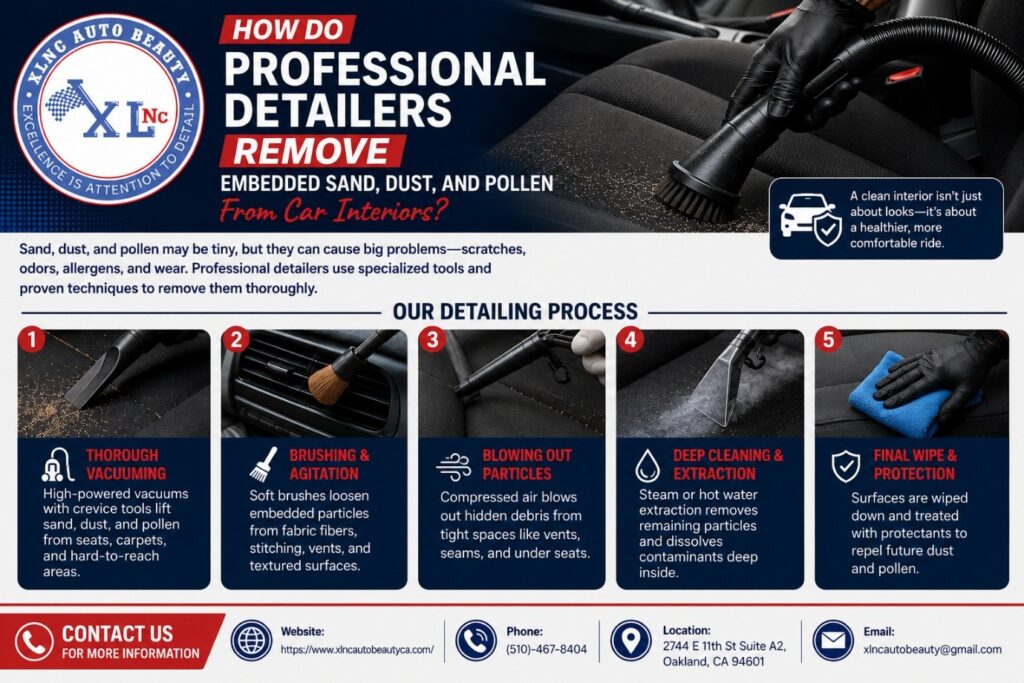
Professional interior detailing follows a planned process instead of rushing through visible areas. Every tool works with the next one. Compressed air loosens debris. Brushes lift it. Steam softens grime. Extraction removes it. Microfiber towels finish each surface without spreading dirt back across the cabin.
This layered approach creates results that last longer because contaminants are removed instead of hidden. It also reduces odors, improves cabin hygiene, and helps interior materials age more gracefully. That is why professional detailing is a smart investment rather than an occasional luxury.
When Should You Schedule Interior Deep Cleaning?
Your vehicle often tells you when it needs more than a quick vacuum. Fine dust returning within days, gritty carpets, musty smells, allergy flare-ups, and stains that refuse to disappear are common signs. Pet hair, spilled drinks, and frequent passengers also speed up interior wear.
Busy professionals, families, luxury vehicle owners, and dealerships benefit from scheduled car deep cleaning because regular maintenance prevents small issues from becoming costly restoration work. A clean interior also creates a better driving experience every single day.
Why Experience Matters During Interior Restoration
Modern vehicle interiors combine leather, Alcantara, fabric, piano black trim, touchscreens, brushed aluminum, carbon fiber, and delicate plastics. Each material reacts differently to moisture, heat, and cleaning products.
Professional detailers understand these differences. They adjust pressure, temperature, brushes, and chemicals for every surface instead of treating the entire cabin the same way. That attention to detail protects premium interiors while delivering consistent, high-quality results.
Final Thoughts
Embedded sand, dust, and pollen do far more than make your vehicle look untidy. They slowly wear interior materials, reduce cabin comfort, and affect air quality. Professional detailing removes these hidden contaminants with specialized equipment, proven methods, and material-safe products that clean thoroughly while protecting your investment.
At XLNC Auto Beauty, we specialize in high-end vehicle restoration, deep cleaning, and long-term protection. We help restore, protect, and preserve your vehicle with precision-driven detailing designed to keep every drive looking and feeling exceptional.
Frequently Asked Questions
1. Can regular vacuuming remove embedded sand from carpets?
No. Household vacuums remove surface dirt only. Embedded sand stays trapped inside carpet fibers and usually requires agitation, compressed air, and extraction equipment for complete removal.
2. Is steam cleaning safe for vehicle interiors?
Yes. When performed by trained professionals, steam cleaning safely loosens dirt, grease, and bacteria while using minimal moisture on suitable interior surfaces.
3. How often should a car interior receive professional deep cleaning?
Most vehicles benefit every six to twelve months. Cars carrying children, pets, or frequent passengers may require professional interior cleaning more often.
4. Does professional interior detailing help reduce allergies?
Yes. Removing pollen, dust, pet dander, and debris from carpets, vents, and upholstery helps improve cabin air quality and reduces common allergy triggers.
5. Can detailing improve my vehicle’s resale value?
Absolutely. A clean, well-maintained interior creates a stronger first impression, reflects better ownership, and can increase buyer confidence during resale or trade-in.