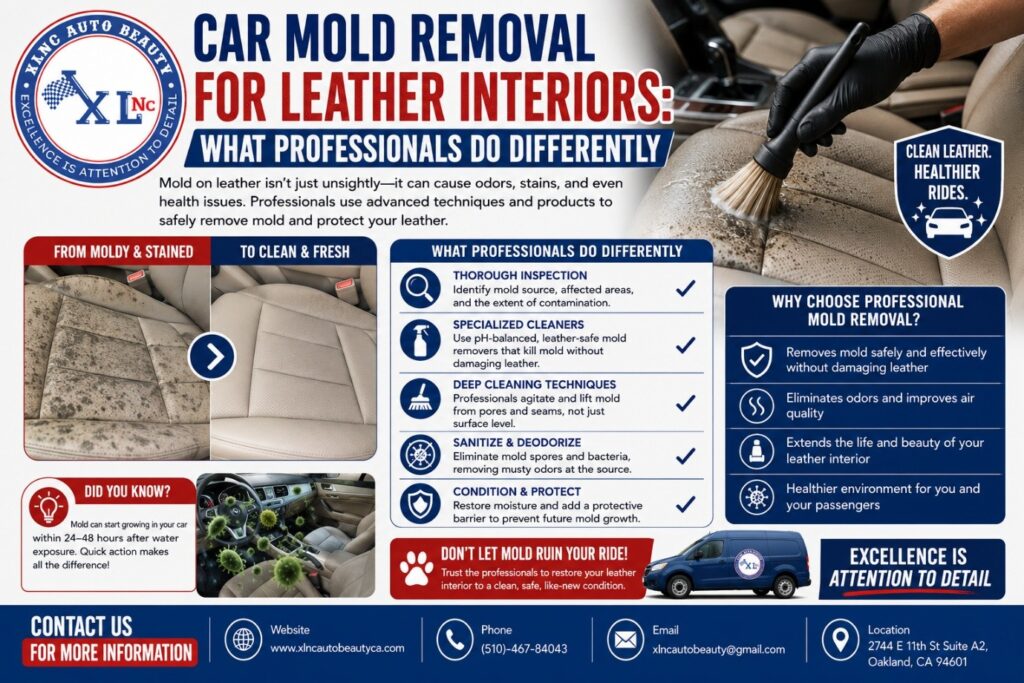
Summary: Professional car mold removal requires more than wiping visible growth from leather seats. Experts inspect moisture sources, seams, stitching, perforations, and protective coatings before choosing material-safe cleaning methods. Proper drying is essential because trapped moisture can cause mold to return. The right process protects leather, prevents unnecessary damage, and supports long-term interior preservation.
Let us start off with a myth – mold on leather seats can be wiped away like dust! That quick fix can miss mold beneath seams, perforations, and padding, making car mold removal services more complex than surface cleaning. So, what is the way out? We will unveil the details for you!
Can Mold Grow on Leather Car Interiors?
Yes. Leather itself is not always the main problem. Moisture, trapped dirt, spills, humidity, and damp padding can create conditions where mold grows. Leather seats often have coatings that protect the material. Aggressive cleaners can damage these layers while failing to address moisture underneath. Leatherette can have similar risks. Its surface may look easy to clean, but seams and stitching can trap moisture and organic debris. Perforated leather needs extra care. Tiny holes can allow moisture and contamination to move below the surface. That is why professionals inspect before they clean.
Why Does Professional Mold Removal Differ?
Professional mold removal for car interior starts with finding the moisture source. Cleaning visible growth without addressing moisture can lead to recurring problems. The technician checks seats, carpets, floor mats, stitching, seams, door panels, and other areas where dampness may remain hidden. The next step depends on the material. Leather, leatherette, vinyl, fabric, plastic, and coated surfaces do not respond to the same chemicals or cleaning pressure.
A good detailer avoids treating every interior like ordinary fabric. Material identification comes first. The wrong product can dry leather, weaken finishes, stain surfaces, or affect protective coatings.
What Do Professionals Check Before Cleaning?
Inspection is the part most DIY attempts skip. A professional looks beyond the visible mold and checks how far moisture may have traveled. Start with the obvious areas. Check seat surfaces, stitching, piping, and perforations. Then inspect carpet edges and areas beneath floor mats. Look for water marks, damp smells, discoloration, soft padding, and signs of repeated moisture exposure. These clues can reveal a larger issue.
If a leak is still active, cleaning alone will not solve the problem. The source needs attention first.
How Is Mold Removed From Leather Seats?
Professional mold removal from car interiors follows a controlled process rather than one quick spray. First, loose contamination is handled carefully. The affected area is isolated as much as practical to avoid spreading debris into clean parts of the cabin. Next, the technician selects a cleaner suitable for the specific leather or leatherette surface. The goal is to remove contamination without stripping the protective finish. Stitching receives special attention. Mold can settle between threads where a simple wipe cannot reach. Perforated seats need even more control. Excess liquid can enter the holes and reach the foam beneath. Professionals limit moisture and use suitable extraction or drying methods where needed.
After cleaning, affected surfaces must dry properly. Mold thrives where moisture remains. A damp seat is not a finished job.
Expert Note From XLNC
Note From An Expert: “Leather needs controlled cleaning. The goal is not to flood the seat or use the strongest chemical. We focus on the material, the contamination, and the moisture source.”
This approach matters because stronger does not always mean better. A harsh product may remove visible growth while damaging the leather finish underneath.
Why Stitching and Perforations Need Special Attention
Mold often hides where cleaning tools do not easily reach. Seat seams are a good example. Stitching creates narrow spaces where moisture and dirt can collect. If these areas stay damp, mold may return even after the main seat surface looks clean. Perforated leather presents another challenge. The tiny holes are designed for airflow and comfort, but they can also allow moisture to move below the surface. Professionals use controlled tools and limited moisture around these areas. The aim is simple: clean thoroughly without pushing contamination deeper.
What Happens to Leather After Mold Cleaning?
Cleaning is only one part of leather preservation. Once contamination has been removed, the surface may need appropriate conditioning or protection. Leather that has been exposed to moisture and repeated cleaning can lose some of its natural feel. A suitable leather care product can help maintain flexibility and reduce dryness. However, conditioning should not be used to cover a problem. If moisture remains below the surface, adding a conditioner too early can complicate the situation.
The correct order is straightforward: identify the source, clean the affected material, dry it properly, then protect the surface when appropriate.
Can You Remove Mold Yourself?
Small surface contamination may appear manageable at home. The risk comes from treating only what you can see. Household bleach or strong cleaners are not automatically safe for automotive leather. They can discolor surfaces, weaken coatings, or leave residues. You also need to consider ventilation and personal exposure when handling mold. If contamination is widespread or keeps returning, professional assessment is the safer route.
For valuable vehicles, DIY experimentation can become expensive. Replacing damaged leather or correcting a failed cleaning attempt costs far more than using the right process initially.
When Should You Book Professional Mold Removal?
Professional help makes sense when mold covers several areas or returns after cleaning. It is also worth considering when moisture has reached carpets, padding, or hidden spaces.
You should seek professional service when:
- Mold appears on several interior surfaces.
- A musty odor remains after cleaning.
- Seats feel damp underneath.
- Mold returns after surface wiping.
- Perforated leather shows contamination around the holes.
- Water leaks have affected the cabin.
- You own a luxury or collectible vehicle.
- You are unsure which products are safe for your interior.
For car mold removal services, the objective should be more than making the cabin look clean. Proper work considers contamination, moisture, material safety, drying, and long-term preservation.
How Can You Prevent Mold From Returning?
Prevention starts with moisture control. Dry wet floor mats quickly and remove standing water from the cabin. Check door seals, window seals, sunroof drains, and other areas that can allow water into the vehicle. A recurring leak can undo even excellent detailing work. Avoid leaving wet clothing, towels, or sports equipment inside the car. These items can increase humidity inside a closed cabin. Regular interior cleaning also helps. Dirt and organic residue can provide a surface where moisture becomes more problematic.
For luxury vehicles, preventive detailing is especially useful. Clean surfaces are easier to inspect, and early signs of moisture can be addressed before they become larger problems.
The Professional Difference Is in the Details
Leather mold removal is not simply about wiping away visible growth. Professionals assess the material, locate moisture, control cleaning pressure, protect stitching and perforations, and dry the affected areas properly. That process helps protect both the appearance and condition of your interior. It also reduces the chance of repeating the same problem. If mold has appeared inside your vehicle, do not hide it under fragrance or aggressive chemicals. Find the cause, treat the affected areas correctly, and protect the material afterward.
We at XLNC Auto Beauty can assess your interior and recommend suitable care; email xlncautobeauty@gmail.com or call (510)-467-8404 to schedule service.
FAQs
1. Can mold permanently damage leather car seats?
Yes. Long-term moisture and mold exposure can affect leather finishes, cause discoloration, create odors, and contribute to material deterioration if left untreated.
2. Can I use bleach to remove mold from leather?
Bleach is not a safe default for automotive leather. It can damage finishes and discolor surfaces, so use a material-appropriate cleaner instead.
3. Why does mold keep returning inside my car?
Recurring mold usually points to an unresolved moisture source. Leaks, damp padding, wet carpets, or poor drying can allow the problem to return.
4. Can mold grow under perforated leather seats?
Yes. Moisture can pass through perforations and reach underlying materials. Professional cleaning uses controlled moisture to avoid pushing contamination deeper into the seat.
5. Should leather be conditioned after mold removal?
Leather may need suitable conditioning after cleaning and complete drying. The product should match the leather finish and should never be used to hide remaining moisture.