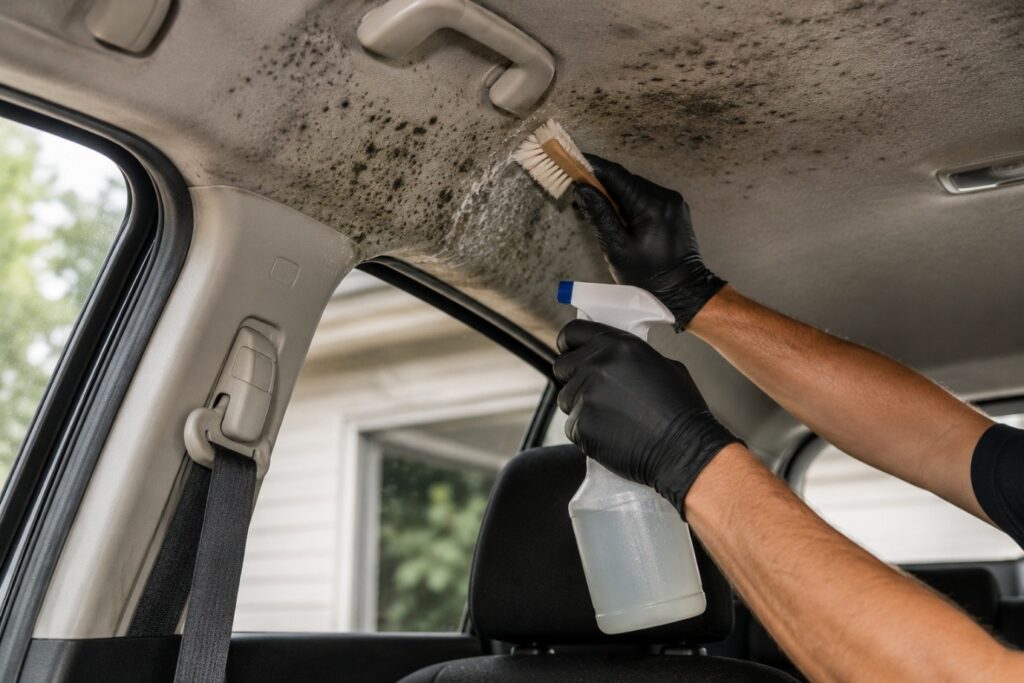
Overview: This blog explains how mold develops inside vehicles, the hidden health risks it creates, and why moisture control matters. You will learn the causes of mold in car interiors, HVAC contamination risks, warning signs, DIY limits, professional detailing methods, and long-term protection solutions that help preserve vehicle value, cabin air quality, and interior safety.
“Why does my car smell musty after rain?”
“Can mold inside a vehicle make you sick?”
“Is professional detailing really necessary for mold removal?”
Yes. And the problem spreads faster than most drivers realize. The process of car mold removal is not just about cleaning stains or bad smells. It is about stopping moisture damage before your seats, carpets, electronics, and air system turn into a breeding ground for harmful spores.
A small leak today can quietly become a major contamination problem next month. Worse, mold often grows where you cannot see it. Under carpets. Inside insulation. Deep within AC vents. That hidden growth can lower resale value and affect the air you breathe every day.
What Actually Causes Mold Inside a Vehicle?
Most mold problems start with trapped moisture. Your car does not need flood damage for mold to grow. A damp floor mat or blocked AC drain is enough.
The biggest causes of mold in car interiors include:
- Sunroof or windshield leaks
- Wet carpets after rain
- Spilled drinks left untreated
- Clogged AC evaporator drains
- Poor ventilation in parked vehicles
- Humid climates and coastal moisture
- Water entering through damaged door seals
Here is the part many drivers miss: mold spores only need moisture, darkness, and still air. Your car cabin checks every box.
That gym bag in the back seat? The damp umbrella under the mat? They can trigger mold colonies surprisingly fast.
And once spores spread through fabric and foam, simple wiping does not solve the issue.
How Mold Develops in Vehicles Without You Noticing
Understanding how mold develops in vehicles helps you stop the problem early.
Mold usually starts below the visible surface. Moisture sinks into seat foam, carpet padding, trunk liners, and insulation layers. Heat trapped inside the cabin speeds everything up. Think of your car like a sealed greenhouse during summer.
At first, you may notice:
- A sour or earthy odor
- Foggy windows in dry weather
- Allergy symptoms while driving
- Small white, green, or black spots near seams
Then comes the dangerous stage.
The HVAC system begins circulating spores through vents. Every time you switch on the AC, microscopic particles spread across the cabin.
That “old sock smell” from your vents? It may not be dirt anymore.
The Hidden Health Risks Most Drivers Ignore
The health risks of mold inside vehicles go far beyond unpleasant smells.
Mold spores can trigger:
- Sneezing and coughing
- Sinus irritation
- Asthma flare-ups
- Headaches
- Skin irritation
- Breathing discomfort during long drives
Children, older adults, and pet owners face higher exposure risks because they spend extended time inside enclosed cabins.
Now here is where things get worse.
When spores enter the ventilation system, they continue circulating even after visible mold disappears. That means your car may look clean while contaminated air still moves through the cabin.
Many drivers clean surfaces but ignore ducts, evaporators, and hidden insulation. That mistake keeps the cycle alive.
Why DIY Cleaning Often Makes Mold Worse
Search online and you will find endless hacks for removing mold from car interiors. Vinegar sprays. Baking soda mixtures. Household cleaners.
Some methods reduce surface stains temporarily. Few address the root contamination.
That is the key difference.
DIY cleaning usually fails because:
- Moisture remains trapped underneath materials
- Spores spread during scrubbing
- Household cleaners damage leather and trim
- HVAC contamination stays untouched
- Odors return within weeks
This is where the debate around DIY vs professional mold removal becomes important.
Professional restoration focuses on containment, extraction, sanitation, and prevention. Surface cleaning alone is like painting over water damage in a house. It may look fine for a while, but the problem keeps growing underneath.
What Professional Mold Restoration Actually Includes
High-end detailing and restoration services approach mold differently. The goal is not only cleaning. It is preservation.
A proper restoration process usually includes:
Interior Moisture Inspection
Technicians locate hidden moisture sources using diagnostic tools. Wet padding and trapped condensation get identified early.
Deep Extraction and Material Treatment
Seats, carpets, and foam layers are cleaned using low-moisture extraction systems designed for automotive interiors.
HVAC Sanitization
Vent systems, evaporator coils, and ducts receive antimicrobial treatment to reduce airborne contamination.
Ozone or Steam-Based Odor Neutralization
Lingering smells are broken down instead of masked with fragrances.
Protective Conditioning
Leather, vinyl, trim, and fabric receive protection treatments that help resist future moisture buildup.
Here is the cliffhanger many vehicle owners never expect: sometimes the visible mold is only ten percent of the actual contamination.
The rest hides below the surface.
How Much Does Mold Removal Usually Cost?
The cost of mold removal depends on severity, material damage, and contamination depth.
Minor cases involving light surface growth cost far less than vehicles with soaked carpeting and HVAC contamination.
Factors affecting pricing include:
- Interior size
- Extent of moisture damage
- Mold location
- Seat and carpet condition
- HVAC treatment requirements
- Odor removal complexity
Luxury vehicles and performance cars often require specialized handling because sensitive materials need non-aggressive cleaning techniques.
Cutting corners here can reduce interior lifespan and resale value quickly.
Our Professional Process Protects More Than Appearance
At restoration level detailing facilities, our professional process focuses on long-term preservation rather than cosmetic cleaning alone.
That means:
- Identifying hidden moisture sources
- Preventing repeat contamination
- Protecting sensitive surfaces
- Improving cabin air quality
- Preserving vehicle value over time
A clean-looking interior means very little if mold spores still circulate through vents and insulation.
Think of mold like rust. What you see on the surface is usually only part of the problem.
How You Can Prevent Mold From Returning
Prevention is simpler than restoration.
You can reduce future mold risks by:
- Drying wet mats immediately
- Running AC systems regularly
- Keeping drains unclogged
- Parking in ventilated spaces
- Addressing leaks quickly
- Avoiding trapped moisture under seats
Small habits protect interiors for years.
Because once mold spreads deep into padding and electronics, repairs become expensive fast.
Final Thoughts
Vehicle mold is not only an appearance issue. It affects air quality, comfort, interior longevity, and even resale value. Quick fixes may hide odors briefly, but lasting protection requires proper moisture control, sanitation, and restoration-level detailing.
At XLNC Auto Beauty, we restore interiors deeply, remove hidden contamination, and protect your vehicle from recurring mold damage. You can check out details via call at – (510)-467-8404 or even write to us at – xlncautobeauty@gmail.com!
FAQs
1. How fast can mold grow inside a car?
Mold can begin growing within 24 to 48 hours if moisture stays trapped inside carpets, seats, or ventilation areas.
2. Can mold inside a vehicle affect breathing?
Yes. Mold spores circulating through HVAC systems may trigger coughing, allergies, sinus irritation, and breathing discomfort during drives.
3. Does car detailing remove mold completely?
Basic detailing may not remove deep contamination. Professional restoration targets hidden moisture, vents, insulation, and odor-causing spores.
4. What does mold inside a car smell like?
Most vehicles with mold smell damp, earthy, sour, or similar to wet towels left indoors too long.
5. Can mold lower my car’s resale value?
Yes. Persistent odors, stained interiors, and contamination concerns can reduce buyer confidence and resale pricing significantly.