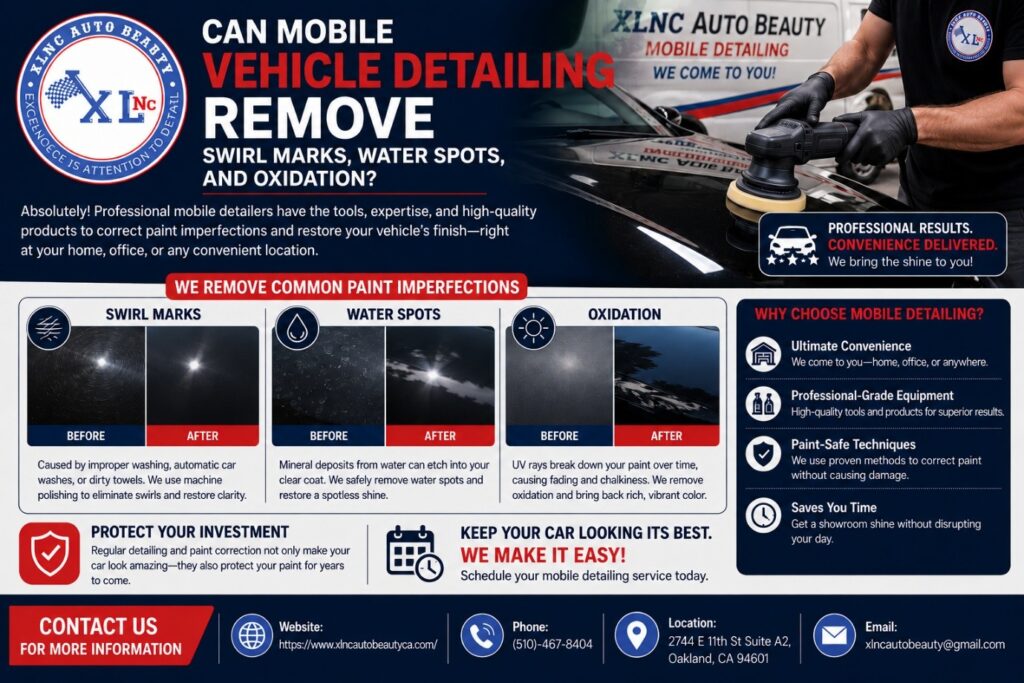
Summary: Professional paint correction can remove many swirl marks, water spots, and oxidation when defects remain within the clear coat. This blog explains polishing stages, clear coat limitations, repainting situations, and why proper maintenance and long-term protection preserve restored paint while helping vehicle owners make informed detailing decisions.
Let’s start by busting a myth – Every Paint Defect Can Be Buffed Away
That sounds nice, but it is not true.
Many people believe a polishing machine can erase every paint defect. It cannot. Professional detailing removes many surface flaws, but some damage sits too deep inside the paint. Knowing the difference helps you choose the right service instead of wasting money on false promises.
If you are considering mobile vehicle detailing, the first step is understanding what professional paint correction can realistically achieve.
Can Professional Detailing Remove Swirl Marks, Water Spots, and Oxidation?
Yes—but only when the damage is within the clear coat.
Swirl marks, light scratches, mild oxidation, and mineral water spots often affect the upper layer of automotive paint. Professional polishing safely levels this surface, restoring clarity without repainting the vehicle. That is why quality detailing focuses on paint correction instead of simply hiding defects.
What Are Swirl Marks, and Why Do They Keep Coming Back?
Swirl marks are tiny circular scratches.
They usually appear after improper washing, automatic car washes, dirty microfiber towels, or dry wiping. Under sunlight, these fine scratches scatter light, making even expensive vehicles look dull. Think of them like scratches on a pair of eyeglasses. The glass still works, but your view becomes cloudy.
Professional polishing removes the damaged surface instead of filling it with temporary products that disappear after a few washes.
Water Spots Are More Than Just Dry Water
Not every water spot is the same.
Fresh mineral deposits usually sit on top of the paint. These can often be removed during decontamination and polishing. However, when minerals remain for weeks or months, they begin etching into the clear coat. At that point, correction becomes more complex and depends on how deeply the paint has been damaged.
Early treatment always produces better results than waiting.
Oxidation Slowly Steals Your Paint’s Shine
Oxidation happens when paint reacts with sunlight, oxygen, and weather.
Over time, the surface loses oils and becomes faded, chalky, or rough. Dark-colored vehicles often look gray, while brighter colors lose their richness. Professional correction removes the oxidized layer and reveals healthier paint underneath whenever enough clear coat remains.
If oxidation reaches the base coat, polishing alone cannot restore the finish.
Mobile Vehicle Detailing and Professional Paint Correction: What Really Happens?
Paint correction is a measured process.
Before polishing starts, professionals inspect paint thickness, defect depth, lighting conditions, and previous repair history. Every vehicle needs a different correction plan because no two paint surfaces age the same way.
This careful inspection prevents unnecessary clear coat removal while delivering the highest possible finish.
Understanding Machine Polishing Stages
Paint correction is not a one-step process.
A single-stage polish removes light swirl marks while improving gloss. It works well for newer vehicles with minor defects.
A two-stage correction begins with a cutting compound that removes heavier imperfections. It is then followed by a refining polish that restores clarity and reflection.
Multi-stage correction goes even further. It targets severe oxidation, sanding marks, deeper swirls, and neglected paint. Although it produces remarkable results, it also requires greater skill, more time, and careful measurement throughout the process.
The goal is never to remove as much paint as possible. The goal is to remove only what is necessary.
Why Clear Coat Thickness Matters
Your clear coat is limited.
Every polishing session removes a microscopic amount of it. That protective layer cannot regenerate once removed. Experienced technicians measure paint condition before correction because aggressive polishing on thin paint creates permanent damage instead of improvement.
Professional detailing always balances defect removal with long-term paint preservation.
When Paint Correction Is No Longer Enough
Sometimes polishing reaches its limit.
Deep scratches that expose the primer, peeling clear coat, severe rock chips, rust damage, or heavily failed paint cannot be corrected through polishing. These conditions require repainting because the protective paint system has already broken down.
A trustworthy detailer will explain these limitations instead of promising impossible results.
Does Convenience Mean Lower Quality?
Not anymore.
Modern car detailing mobile solutions bring professional-grade equipment, lighting, compounds, and polishing systems directly to your location. Whether your vehicle sits at home or outside your workplace, skilled technicians can perform high-level correction without sacrificing quality.
For busy professionals across the Bay Area, this convenience saves valuable hours without compromising results.
Restoration Is Only Half the Job
Correcting paint without protecting it is like cleaning your windows before a dust storm.
Once defects are removed, ceramic coatings, premium sealants, and proper maintenance washing help preserve the finish for years. Regular inspections also reduce the need for aggressive polishing in the future.
Choosing a trusted mobile detail service means building a maintenance plan instead of repeatedly fixing preventable damage.
Why Proper Maintenance Makes Every Detail Last Longer
Many paint defects return because maintenance habits never change.
Safe washing methods, clean microfiber towels, quality drying techniques, and scheduled protection dramatically reduce future swirl marks. Even choosing mobile detail and car wash services that follow paint-safe procedures helps preserve correction results far longer than standard tunnel washes.
It is one of the smartest ways to protect your investment.
Mobile Car Wash vs Detailing: Know the Difference
Many people compare mobile car wash vs detailing, but they serve different purposes.
A standard wash removes dirt from the surface. Professional detailing restores, corrects, protects, and preserves every finish on the vehicle. That difference becomes obvious when faded paint regains depth, reflections become sharper, and long-term protection replaces temporary shine.
Quality mobile car detailing services focus on preserving vehicle condition rather than simply making it look clean for a day.
Final Thoughts
Professional paint correction removes many swirl marks, water spots, and oxidation, but it also respects the limits of your vehicle’s clear coat. When performed correctly, it restores appearance while protecting long-term paint health instead of risking unnecessary damage. At XLNC Auto Beauty, we restore, protect, and preserve your vehicle with honest assessments, expert correction, and tailored solutions that help your finish stay beautiful for years.
Frequently Asked Questions
1. Can every swirl mark be removed?
No. Most light and moderate swirl marks can be corrected. Very deep scratches that pass through the clear coat usually require repainting instead of polishing.
2. How long does paint correction take?
Most vehicles need one to three days, depending on paint condition, correction stages, and the level of restoration required.
3. Will polishing damage my vehicle’s paint?
Not when performed correctly. Professional technicians remove only minimal clear coat while preserving long-term paint health and appearance.
4. Should ceramic coating be applied after paint correction?
Yes. Ceramic coatings protect the freshly corrected surface, reduce contamination, and make routine washing easier while maintaining gloss longer.
5. How often should paint correction be done?
Most vehicles only need correction every few years if proper washing, protection, and maintenance practices are followed consistently.