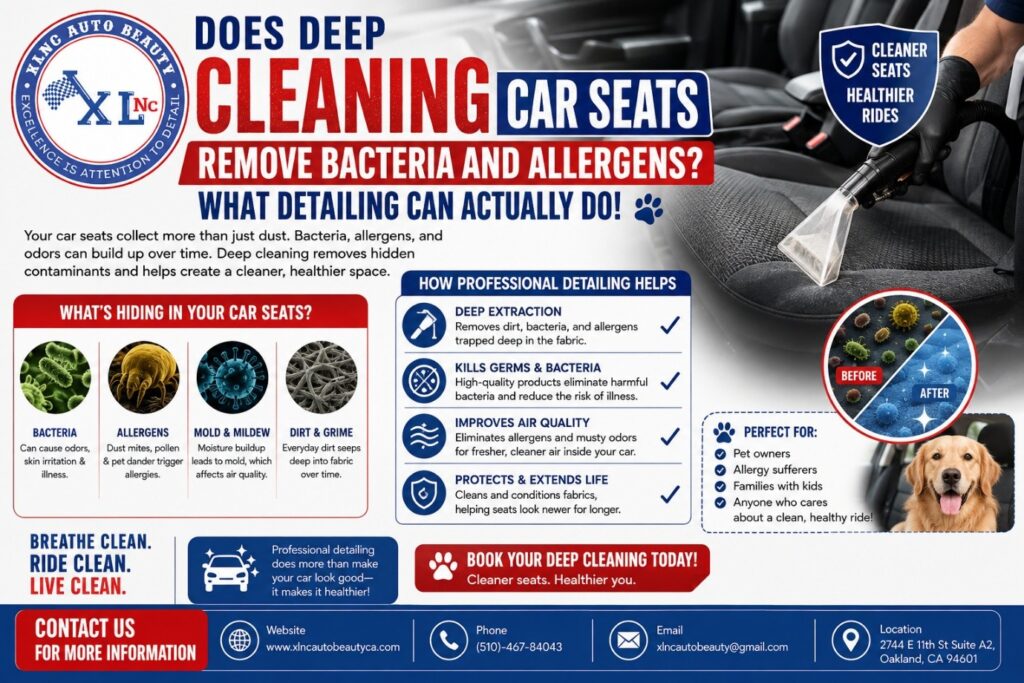
Summary: Deep cleaning can remove dirt, pet dander, pollen, food residue, hair, and odor-causing buildup from car interiors. It can also reduce bacteria and allergens on cleaned surfaces, but it cannot make a vehicle completely germ-free. Professional detailing uses material-safe cleaning, extraction, sanitization, odor treatment, and proper drying to improve cabin hygiene.
Most car owners notice the smell before the mess: seats feel stale, crumbs hide in seams, and dust keeps returning. A deep clean car seats service can remove the buildup behind these problems.
Can Deep Cleaning Really Remove Bacteria and Allergens?
Yes, deep cleaning can reduce bacteria, dust, pollen, pet dander, and other contaminants from car interiors. However, no professional detailer should promise complete germ or allergen removal.
Cleaning physically removes dirt and residue from surfaces. Sanitization is different. It uses suitable products or methods to reduce microorganisms after the surface has been properly cleaned.
That difference matters when you compare detailing services. A clean seat is not automatically a sanitized seat, and a sanitized surface is not necessarily free from every allergen.
If you want to deep clean car seats, ask what the service includes. Find out whether it covers extraction, surface cleaning, sanitization, odor treatment, and proper drying.
Why Do Car Seats Hold So Much Dirt?
Car seats collect more than visible stains. Skin flakes, dust, pollen, food particles, pet hair, and spilled drinks can settle between fabric fibers and seams.
Routine wiping removes surface grime but often leaves deeper residue behind. Over time, that hidden buildup can contribute to stale odors and make the cabin feel less clean.
Fabric seats can hold moisture too. A drink spill may travel below the visible surface, leaving residue behind even after the top looks dry.
Leather behaves differently. Dirt usually remains closer to the surface, but stitching, seams, cracks, and textured areas can still collect oils and debris.
Where Do Allergens Hide Inside Your Car?
Allergens can settle in carpets, floor mats, seat seams, door pockets, trunk liners, and gaps around the center console. Pet hair can also carry dander into upholstery.
Your air vents deserve attention as well. Dust around accessible vent surfaces can become noticeable when the climate system operates and moves air through the cabin.
Family vehicles often need more frequent cleaning. Crumbs, outdoor dirt, pet hair, and spills can build quickly when several people use the same vehicle every day.
What Does Deep Cleaning Car Detailing Actually Do?
A professional deep cleaning car detailing process begins with inspection. The technician checks the upholstery, carpet, stains, odors, material type, and areas that need special treatment.
Loose debris comes out first. Vacuuming removes hair, crumbs, sand, and grit before wet cleaning begins. This prevents loose dirt from turning into muddy residue.
Fabric may then receive a suitable cleaner and gentle agitation. Extraction removes loosened soil and moisture, leaving the material cleaner without unnecessarily soaking the upholstery.
High-contact areas also need attention. Steering wheels, door handles, armrests, gear selectors, switches, and seat-belt areas collect oils and dirt through constant use.
The exact process should change with the material. A method suitable for fabric may be unsuitable for leather, delicate trim, Alcantara, or specialty interior surfaces.
Can Detailing Reduce Bacteria and Allergens?
Professional cleaning can significantly reduce the amount of unwanted material present on cleaned surfaces. That includes dust, pollen, pet dander, food residue, hair, and other particles.
However, your vehicle cannot be made permanently sterile. New particles enter whenever you open the doors, drive with passengers, carry bags, or bring pets inside.
This is why responsible detailing focuses on measurable cleaning rather than absolute promises. The goal is to remove buildup and improve the condition of the interior.
For allergy-sensitive households, this approach makes practical sense. Removing accumulated dust, hair, and dander can reduce the material sitting inside the cabin.
Why Odor Treatment Is Not the Same as Sanitization
A pleasant fragrance can make a car smell cleaner, but fragrance does not remove the source of an odor. Proper odor treatment starts by identifying what caused the smell.
Food, pet hair, smoke, spilled drinks, and trapped moisture can all create persistent odors. Simply adding fragrance may cover these smells temporarily without solving the underlying issue.
Moisture needs particular care. If liquid reaches carpet padding or upholstery layers, surface wiping may not be enough. Extraction and proper drying become necessary.
Pet odors can also remain after visible hair disappears. Dander and residue may settle into fabric, so removing surface hair alone may not fully resolve the smell.
Which Interior Areas Should You Prioritize?
Start with high-contact surfaces. Steering wheels, armrests, door handles, center consoles, and gear selectors deserve regular cleaning because they collect oils and dirt quickly.
Next, focus on fabric areas. Seats, carpets, mats, and trunk liners can hold much more debris than they appear to contain.
Do not ignore gaps and seams. Seat rails, stitching, console edges, and door pockets collect debris because routine cleaning often misses these small spaces.
How Often Should You Deep Clean Your Car?
There is no universal schedule. Your driving habits, passengers, pets, climate, and daily use determine how quickly interior contamination builds.
A family vehicle may need deep interior cleaning several times each year. A commuter who rarely eats inside may need it less frequently.
Book a deeper cleaning when you notice persistent odor, visible stains, heavy pet hair, sticky surfaces, or dust that returns quickly after routine cleaning.
What Makes Professional Detailing Different?
Professional deep cleaning for cars goes beyond wiping visible dirt. Technicians use specialized tools, suitable cleaners, extraction equipment, and material-specific methods.
The biggest benefit is controlled cleaning. Using too much water, harsh chemicals, or aggressive brushing can damage upholstery, leather, trim, adhesives, or protective finishes.
Professional detailing also gives you a more complete process. Loose debris is removed before wet cleaning, stains receive targeted treatment, and moisture is managed carefully.
For luxury and performance vehicles, this control matters even more. Delicate materials should not be treated like ordinary household fabric.
When Should You Book Professional Interior Cleaning?
Professional cleaning makes sense when home methods no longer control stains, odors, pet hair, or heavy soil. It is also useful before selling a vehicle.
Busy professionals can benefit from the time savings. Instead of spending hours cleaning seats and carpets, you can have the vehicle serviced while handling work or other plans.
Families and pet owners may also need deeper care. Regular interior maintenance becomes harder when hair, spills, crumbs, and outdoor debris build up every day.
The Practical Answer: Cleaning Helps, But It Has Limits
Deep cleaning can reduce accumulated dirt, allergens, pet dander, residue, and odor sources. Sanitization can provide additional microbial reduction when the right products and methods are appropriate.
Still, no responsible detailer can promise a completely germ-free car. Your vehicle remains an active environment, so new particles will enter after every cleaning.
The best approach is straightforward: remove the source, choose the right cleaning method, control moisture, dry the interior properly, and maintain the cabin regularly.
Conclusion
A clean car interior is about more than appearance. Removing built-up soil can help create a fresher, cleaner cabin while reducing the material that contributes to unpleasant odors and poor interior hygiene.
If your seats feel stale or hold stubborn stains, deep clean car seats service can provide a practical reset. Consistent maintenance then helps preserve that result.
We at XLNC Auto Beauty assess your vehicle and recommend suitable interior care; email xlncautobeauty@gmail.com or call (510)-467-8404 to schedule service.
FAQs
1. Does car seat cleaning kill all bacteria?
No. Professional cleaning can reduce bacteria and contaminated soil, but it cannot guarantee complete removal of every microorganism inside your vehicle.
2. Can deep cleaning help with car allergies?
Yes. Removing dust, pollen, pet hair, dander, and residue can reduce allergen buildup, although professional detailing cannot make a vehicle completely allergen-free.
3. Is steam cleaning better for removing allergens?
Steam can help loosen soil and reduce microorganisms on suitable surfaces, but the best method depends on material type, moisture tolerance, and drying needs.
4. How long should car seats dry after deep cleaning?
Drying time depends on fabric, weather, airflow, and moisture used. Proper extraction and ventilation help seats dry faster and prevent lingering damp odors.
5. Should you sanitize a car after deep cleaning?
Sanitization can help when microbial reduction is a specific goal. Cleaning should come first because surface soil can reduce the effectiveness of some treatments.