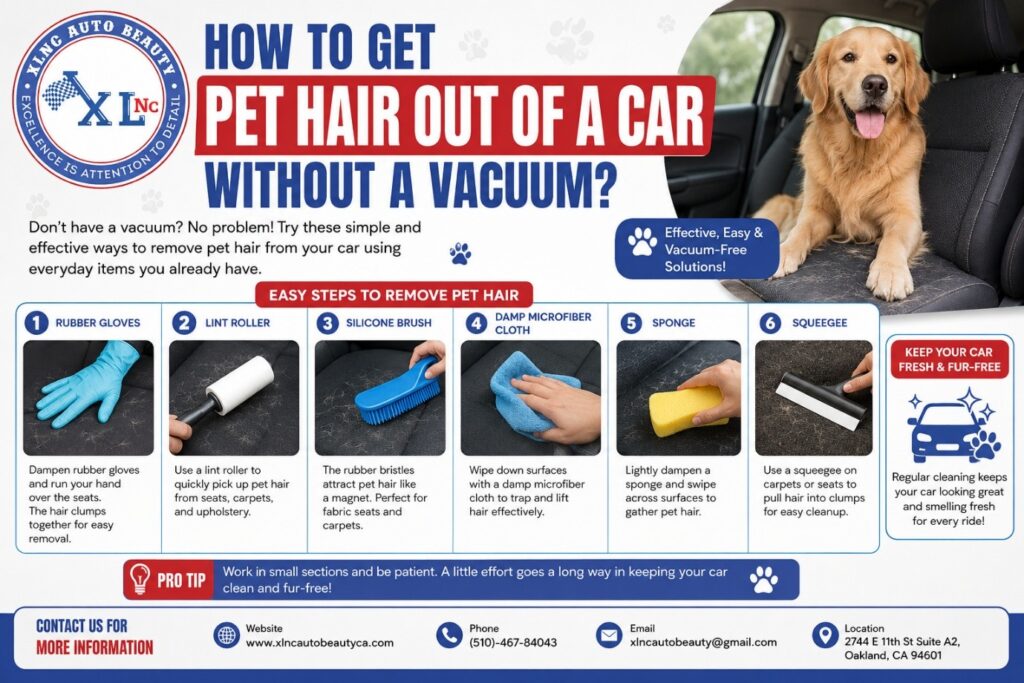
Summary: Learn how to get pet hair out of car without vacuum using simple methods such as damp rubber gloves, rubber brushes, tape, and lint rollers. Discover the best techniques for carpets, cloth and leather seats, ways to prevent pet hair buildup, and when professional pet hair removal is the better choice.
Pet hair can quickly turn a clean vehicle into a furry mess. If you want to get pet hair out of car without vacuum, you do not always need expensive equipment. The right technique can help you remove pet hair from car seats, carpets, and other surfaces using simple household items. This is especially useful when hair is stuck deep in upholstery or when you do not have access to a vacuum.
The key is to loosen the hair first and then collect it rather than simply brushing it around. Damp rubber gloves, rubber brushes, and tape can all help tackle stubborn fur effectively. Let us get you the specifics –
Why Is Pet Hair So Hard to Remove?
Pet hair does not always sit loosely on the surface of your vehicle. It can become tangled between carpet fibers and upholstery, making embedded pet hair surprisingly difficult to lift. Dog and cat hair can also work their way into seams, corners, and textured fabrics after repeated rides.
Another reason is static electricity. Friction between hair, clothing, and upholstery can create a static charge that causes individual strands to cling to fabric. Coarse carpet fibers can hold onto hair even more tightly, particularly when your pet regularly rides in the same area.
This is why simply wiping a seat with a dry cloth may not work. You need to create enough friction to pull the hair loose and gather it into manageable clumps. The good news is that several vacuum-free methods can do exactly that.
The Best Vacuum-Free Methods, Ranked
If you want to remove dog hair from car interiors without a vacuum, some methods are much more useful than others. Here is how they compare.
- Damp rubber gloves – Best all-around
A slightly damp rubber glove is one of the simplest ways to collect pet hair. Run your gloved hand across the upholstery or carpet in short strokes. The rubber creates friction and gathers loose and embedded hair into clumps that you can pick up.
- Rubber pet-hair brush – Best for deep or embedded fur
A rubber pet-hair brush provides more aggressive contact than a glove. It is particularly useful for pet hair car carpet because the rubber edges can reach between carpet fibers and pull out stubborn fur. Use gentle, controlled strokes to avoid unnecessarily roughening the material.
- Duct or packing tape – Fastest for small spots
Tape works well when you only have a few concentrated patches of hair. Wrap tape around your hand with the sticky side facing outward and press it against the affected area. It is useful for seams, door panels, and small sections of upholstery.
- Lint roller – Good for touch-ups
A lint roller can pick up loose surface hair from seats and clothing. However, it is less effective against deeply embedded fur. Think of it as a finishing tool rather than the main solution for a heavily haired interior.
- Balloon/static trick – Least effective
Rubbing a balloon over upholstery can attract some loose hair through static charge. However, results vary and it is generally less effective than rubber gloves or a dedicated rubber brush. It is better suited to small amounts of loose hair than serious buildup.
|
Method |
Best For | Effort |
Effectiveness |
|
Damp rubber gloves |
Seats, carpets, everyday buildup |
Low |
High |
|
Rubber pet-hair brush |
Deep or embedded fur |
Medium |
Very high |
| Duct or packing tape |
Small spots and seams |
Low |
Medium |
|
Lint roller |
Surface touch-ups |
Low |
Low to medium |
|
Balloon |
Small amounts of loose hair |
Low |
Low |
For a quick DIY solution, start with damp rubber gloves. For severe buildup, especially in carpet, a rubber pet-hair brush is usually the better choice.
Step-by-Step: The Damp Glove Method
The rubber gloves pet hair method is inexpensive, simple, and does not require a vacuum. Follow these steps for the best results.
- Choose the right gloves
Use clean household rubber or latex gloves. Avoid gloves with abrasive surfaces that could be unsuitable for delicate upholstery.
- Lightly dampen the glove
Wet the glove with clean water and squeeze off the excess. It should be damp, not dripping. Too much water can unnecessarily wet your upholstery.
- Test a small area
Before working on the entire interior, test the method on an inconspicuous section. This is especially important for delicate or specialty materials.
- Work in one direction
Place your gloved hand against the surface and move it in short strokes in one direction. Avoid simply rubbing back and forth, which can spread hair around.
- Gather the hair
As the glove moves across the surface, hair should collect into small clumps. Pick up the clumps by hand and place them in a waste bag.
- Repeat stubborn areas
For embedded pet hair, make several gentle passes over the same area. Applying slightly more pressure can help loosen hair, but do not aggressively scrub delicate fabrics.
- Finish the surface
Once most of the hair has been removed, wipe the area with an appropriate interior-cleaning cloth or product for the specific material.
This method is particularly useful when you need to get dog hair out of car carpet quickly without using electrical equipment.
Different Surfaces Need Different Care
Not every part of your car should be cleaned in exactly the same way. The material determines how aggressively you can work.
Carpet
Carpet can hold a significant amount of fur because its fibers provide plenty of places for hair to become trapped. For pet hair car carpet, use a damp rubber glove or rubber brush and work in short strokes. Pay special attention to floor edges, seat rails, and areas where your pet normally sits.
Avoid soaking the carpet. Excess moisture can create longer drying times and unpleasant odors.
Cloth Car Seats
Cloth car seats can trap fine strands deep between their woven fibers. A lightly damp rubber glove can gather surface hair, while a rubber brush can help with heavier buildup. Work carefully around stitching and seams so you do not damage the fabric.
For stubborn cat hair car seats, take your time and work in small sections rather than trying to clean the entire seat at once.
Leather Car Seats
Leather car seats are generally easier to wipe clean because hair does not become woven into the material like it can with fabric. However, hair can still collect around stitching, seams, seat gaps, and textured areas.
Use a soft, suitable cleaning method and avoid excessive moisture. Once the hair is removed, proper leather seat cleaning and conditioning can help keep the material clean and maintained.
Preventing Pet Hair Buildup Between Trips
The easiest way to deal with pet hair is to stop a major buildup before it starts.
Brush your pet before getting into the car. Removing loose fur beforehand can significantly reduce the amount that reaches your seats and carpets.
A washable seat cover or blanket can also create a barrier between your pet and the upholstery. A hammock-style cover can be especially useful for dogs because it helps contain loose hair in one area.
Keep a pair of rubber gloves in your vehicle for quick cleanups. After each trip, spend a few minutes removing visible hair before it becomes embedded.
Regular small cleanups are much easier than waiting until the entire interior is covered in fur.
When Is It Time to Call a Professional?
DIY methods work well for light and moderate buildup, but some interiors need more thorough cleaning. Consider professional pet hair removal when:
- Pet hair is deeply embedded throughout the carpet and upholstery.
- Hair has accumulated around seams, vents, seat rails, or difficult-to-reach areas.
- You have tried several household methods without getting satisfactory results.
- Your vehicle has a strong pet odor along with visible hair.
- You need the entire interior cleaned rather than only one affected area.
- You simply do not have the time to clean the car yourself.
XLNC Auto Beauty provides pet hair removal and interior detailing services in Oakland, San Francisco, and Walnut Creek. Our detailing services include pet hair removal, deep cleaning, leather detailing, odor elimination, and full interior detailing.
If DIY cleaning is no longer enough, professional detailing can save you time and help restore the appearance of your vehicle. For local service, explore car detailing Oakland with XLNC Auto Beauty and request a quote. You can always give us a call at – (510)-467-8404 or mail us your queries at – xlncautobeauty@gmail.com! If you are interested in ceramic coatings, then you can directly come down to our shop at – 2744 E 11th St Suite A2, Oakland, CA 94601, as this service is available only at our shop!
FAQ
1.Does the glove method really work without a vacuum?
Yes. A slightly damp rubber glove creates friction that helps loosen and collect pet hair from upholstery and carpet. It works best when you clean in short, controlled strokes.
2. How often should I clean pet hair out of my car?
For pets that regularly ride in your vehicle, remove visible hair after every few trips. A deeper cleaning every few weeks can help prevent stubborn buildup.
3. What is the best way to remove dog hair from car carpet?
A damp rubber glove or rubber pet-hair brush works well. Move it in short strokes to loosen hair from carpet fibers, then collect the resulting clumps by hand.
4. Can I use the same method on leather seats?
Yes, but use extra care. Leather does not trap hair like fabric, so gentle wiping is usually enough. Follow with suitable leather care when necessary.
5. Can I remove pet hair from cloth car seats without a vacuum?
Yes. A damp rubber glove or rubber pet-hair brush can loosen and collect pet hair from cloth car seats without damaging the fabric when used gently.