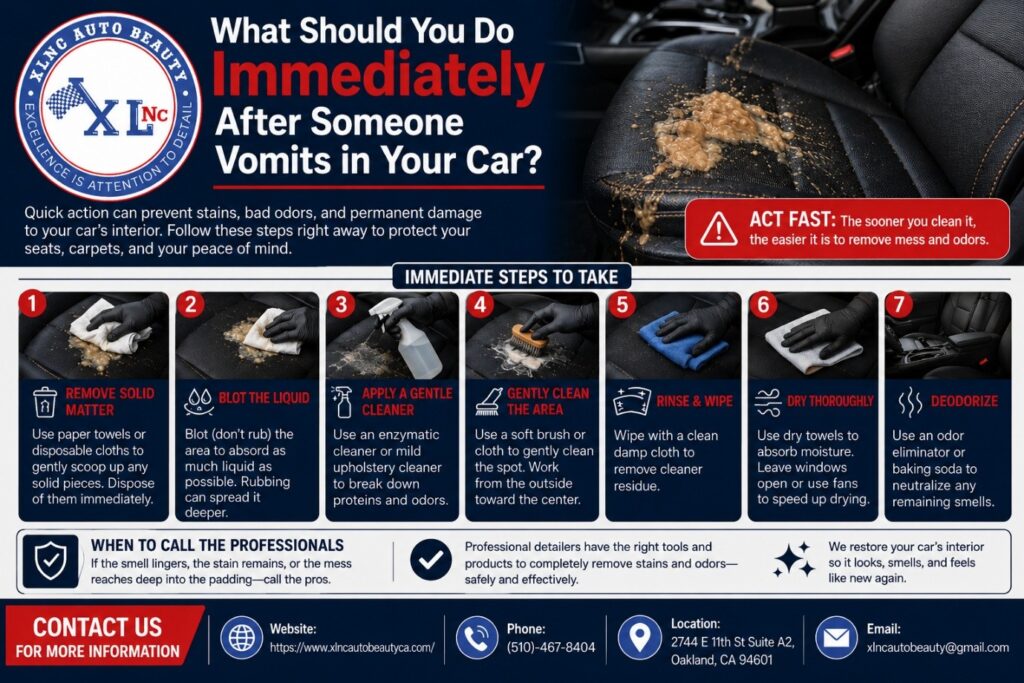
Summary: Someone vomiting inside your car needs an immediate response. This guide explains the first steps that reduce stains, bacteria, odors, and interior damage before deep cleaning begins. Learn common mistakes to avoid, when professional detailing becomes necessary, and how proper automotive restoration protects your vehicle’s appearance, hygiene, and long-term value.
You hear a sudden gasp. Then it happens. Your car interior is now covered in vomit. Before panic takes over, know this. Cleaning up vomit in car starts with quick decisions. Those first few minutes can decide whether your vehicle keeps its fresh interior or carries an odor that refuses to leave.
Your first instinct may be to wipe everything immediately. Resist that urge. Rubbing fresh vomit deeper into fabric, leather, or carpet only spreads the mess. Instead, take a breath and control the situation. The goal is simple. Stop stains, bacteria, moisture, and odor before they settle.
Your First Decision Matters More Than You Think
Pull over as soon as it is safe. Open every possible door and window. Fresh air starts reducing trapped gases that create lingering smells. It also slows moisture from soaking deeper into the upholstery. Every minute counts once organic matter touches your vehicle’s interior.
Next, protect yourself. Wear disposable gloves if available. Vomit carries bacteria, stomach acids, and digestive enzymes that should never stay on interior surfaces. A simple pair of gloves also prevents cross-contamination while handling contaminated materials.
Remove solid material carefully using paper towels or disposable towels. Lift it instead of dragging it across the surface. Think of it like picking up broken glass. One careless swipe can spread contamination into clean areas and create a much larger cleaning zone.
Here comes the mistake many vehicle owners regret. They spray random household cleaners directly onto the stain. That quick shortcut often locks proteins deeper into fabrics or reacts badly with leather finishes. The real damage may not appear until days later.
Why Speed Protects More Than Just Appearance
Vomit is not only unpleasant. It is acidic. That acidity starts breaking down delicate interior materials almost immediately. Leather coatings, fabric fibers, stitching, foam padding, and carpets can all suffer if contaminants remain trapped beneath the surface.
Moisture is another hidden problem. Surface cleaning may make the seat look better, yet liquid often travels underneath. Once moisture reaches foam cushions, it creates an ideal environment for bacteria and stubborn odors that ordinary cleaning rarely removes completely.
This is why cleaning up vomit in car should never stop with surface wiping. Deep extraction becomes necessary whenever fluids penetrate upholstery, carpets, seat seams, or floor padding. Skipping this step often means the smell quietly returns after several warm days.
Avoid These Common Emergency Cleaning Mistakes
Many people pour hot water over the affected area. That sounds logical, but heat can set protein-based stains deeper into fibers. Lukewarm water, used carefully and sparingly, is usually the safer choice during emergency response.
Strong fragrances are another common mistake. Air fresheners only mask unpleasant smells. They do not remove bacteria or organic residue. As the fragrance fades, the odor often returns stronger because the actual contamination remains untouched beneath the surface.
Bleach should also stay off your list. It can discolor fabrics, weaken stitching, damage leather coatings, and leave permanent marks. Professional automotive detailing products are designed to clean safely without compromising original interior materials.
Cleaning Up Vomit in Car: The Right First-Response Steps
Start by blotting excess moisture instead of scrubbing. Gentle pressure lifts contamination while protecting fibers. Continue replacing towels until they stop absorbing liquid. This simple habit reduces spreading and prepares the surface for proper cleaning.
Apply an automotive-safe enzyme cleaner if available. Enzymes break down proteins responsible for stubborn odors instead of covering them. Allow enough dwell time according to product directions before gently wiping the treated surface.
If the incident reaches seat gaps, carpet edges, or under floor mats, remove loose components whenever possible. Hidden pockets often trap liquid. Missing these areas is like leaving food inside a lunchbox. Sooner or later, the smell always reminds you.
Just when everything appears clean, another surprise may be waiting underneath the seat cushion. That hidden contamination often explains why unpleasant odors return several days after what seemed like a successful cleanup.
When Home Cleaning Is No Longer Enough
Some situations need more than towels and cleaner. If vomit reaches foam padding, seat tracks, vents, or carpet backing, surface treatment cannot remove everything. Hidden contamination continues breaking down, creating odors that become harder to eliminate with time.
Professional detailing uses extraction machines, interior-safe disinfectants, steam where suitable, and odor-neutralizing treatments. These methods remove contamination instead of hiding it. The result is a cleaner cabin, healthier air, and better long-term protection for valuable interior materials.
What Does a Professional Restoration Process Include?
A thorough car vomit cleaning service begins with a detailed inspection. The affected area is checked to understand how deeply the contamination has spread. This prevents unnecessary cleaning while ensuring hidden areas are not overlooked.
The next step focuses on safe removal. Technicians extract remaining residue before treating surfaces with specialized automotive products. Fabric, leather, vinyl, plastics, and carpeting each require different methods because every material reacts differently to moisture and cleaning chemicals.
Deep extraction follows once surface contamination is removed. This process pulls liquid and dissolved residue from beneath upholstery and carpets. Removing hidden moisture greatly reduces bacterial growth and helps stop unpleasant odors from returning later.
The final stage is sanitization and odor neutralization. Instead of masking smells, professional treatments target the source. Interior surfaces are left clean, fresh, and ready for everyday use without risking damage to factory finishes.
Special Care for Leather and Luxury Interiors
Luxury interiors deserve extra attention. Premium leather, Alcantara, suede, wood trim, and stitched panels react differently than standard materials. Using the wrong cleaner can dry leather, discolor trim, or weaken protective coatings.
That is why cleaning vomit from car seat requires products made specifically for automotive interiors. Gentle cleaning preserves softness while protecting original finishes. The goal is not simply removing the stain but maintaining the vehicle’s long-term value and appearance.
Families, Pet Owners, and Busy Drivers Should Not Wait
If children, pets, or passengers regularly travel in your vehicle, quick action becomes even more important. Bacteria and odors can spread through the cabin, especially during warm weather when trapped moisture speeds up bacterial activity.
Busy schedules often tempt people to postpone proper treatment until the weekend. Unfortunately, stains do not wait. The longer contamination remains, the greater the chance of permanent discoloration, lingering odors, and expensive restoration work.
Protect Your Vehicle Before Damage Becomes Permanent
Think of your vehicle’s interior like your home’s carpet. A fresh spill is usually manageable. Leave it untouched for days, and the cleanup becomes far more difficult. Automotive interiors behave the same way, only with more delicate materials.
If the affected area shows discoloration, smells sour after drying, or still feels damp, professional attention is the safest choice. Proper car interior cleaning vomit restores cleanliness while protecting the investment you have already made in your vehicle.
Final Thoughts
The first few minutes after someone vomits inside your vehicle shapes the final outcome. Quick action limits stains, reduces bacterial growth, protects interior materials, and prevents odors from settling deep below the surface. We at XLNC Auto Beauty specialize in restoring, sanitizing, and preserving vehicle interiors with precision, helping you protect your investment before temporary damage becomes permanent through expert cleaning vomit from car solutions.
Frequently Asked Questions
1. How quickly should you clean vomit from a car?
Start cleaning immediately. Fast action reduces staining, bacterial growth, moisture penetration, and odor buildup before contaminants settle into upholstery or carpeting.
2. Will the smell disappear after wiping the surface?
Not always. Surface cleaning removes visible residue, but hidden moisture inside foam or carpet padding can continue producing unpleasant odors.
3. Can household cleaners damage my car interior?
Yes. Some household cleaners may discolor leather, weaken fabric fibers, or damage protective coatings. Automotive-safe products are always the better choice.
4. When should you hire a professional detailing service?
Professional cleaning is recommended when contamination reaches seat padding, carpets, vents, leather seams, or if odors remain after initial cleaning.
5. Can professional detailing help preserve resale value?
Yes. Prompt restoration prevents permanent stains, interior deterioration, and lingering odors, helping maintain a cleaner cabin and stronger resale appeal.