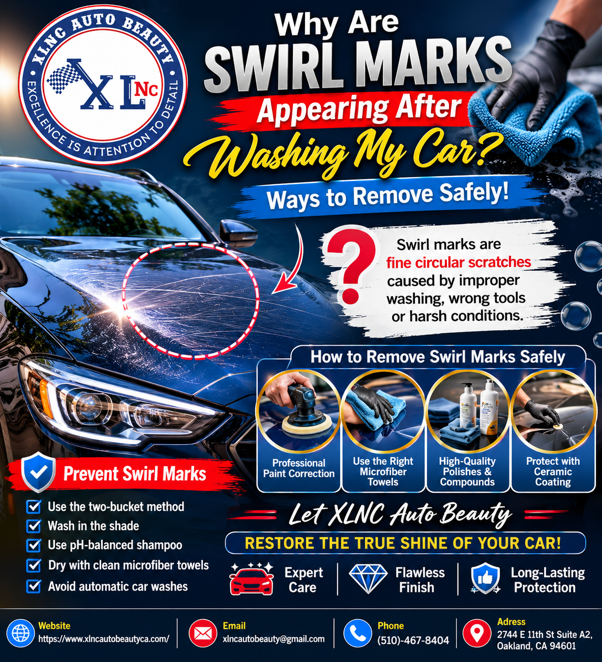
Summary: This guide explains how incorrect washing creates swirl marks on car paint and provides practical safe removal steps. Readers learn the two-bucket method, proper tools, decontamination, and when to seek professional machine polishing for lasting results.
You pull your car out after a quick wash and spot those frustrating fine circles all over the paint! Swirl marks often show up right after you clean your vehicle. They turn a glossy finish dull and make your pride and joy look neglected.
Incorrect washing techniques create fine scratches and circular marks on the clear coat. These tiny scratches catch light at different angles and create the web-like pattern you see. Most people cause them without realizing it during routine cleaning.
What Exactly Causes Swirl Marks on Your Paint?
Swirl marks happen when dirt and grit get dragged across the paint surface. Rough sponges, dirty towels, or washing in direct sunlight trap particles that act like sandpaper. Even automatic car washes with spinning brushes often leave these marks because they cannot control pressure or dirt.
Your car’s clear coat protects the color underneath. Once scratched, light bounces off the imperfections and shows those dreaded swirls. Busy Bay Area drivers who wash quickly between meetings notice this problem most.
The auto detailing process fixes these issues properly when done right. Professionals understand exactly how to lift dirt without adding new damage.
How Do Swirl Marks Affect Your Car’s Value and Look?
These marks do more than look bad. They make your vehicle appear older and poorly maintained. Luxury and performance car owners watch resale value drop when swirls build up over time. Families with pets or kids face extra challenges with interior dirt that often leads to harsher exterior cleaning habits.
Left untreated, swirls let contaminants sit deeper in the paint. This speeds up oxidation and makes future correction harder. Sellers and dealerships know a swirl-free finish can add hundreds to thousands in perceived value.
Safe Washing Methods That Actually Protect Your Paint
Start with the two-bucket wash method. Fill one bucket with pH-neutral shampoo mixed in clean water. Use the second bucket for rinsing your wash mitt. This keeps dirt from going back onto the car.
Choose microfiber wash mitts instead of old rags or sponges. These soft fibers lift dirt gently without grinding it in. Work from top to bottom in straight lines or gentle circles with light pressure. Never scrub hard.
pH-neutral shampoos clean effectively without stripping wax or sealants. Harsh soaps dry out the paint and make it more vulnerable to new swirls. Always wash in the shade on a cool surface.
The Complete Auto Detailing Checklist
Here is a simple auto detailing checklist you can follow at home:
|
Step |
Action |
Why It Matters |
|
1 |
Rinse thoroughly |
Removes loose dirt before contact |
|
2 |
Two-bucket wash |
Prevents cross-contamination |
|
3 |
Use microfiber mitt |
Glides smoothly over paint |
|
4 |
pH-neutral shampoo |
Safe for coatings and wax |
|
5 |
Dry with clean microfiber |
Avoids water spots and new scratches |
|
6 |
Inspect for contaminants |
Prepares for next protection step |
Print this car detailing checklist and keep it in your garage. It turns washing from a chore into proper paint care.
When to Move Beyond Washing to Decontamination
Regular washing removes surface dirt but not bonded contaminants like industrial fallout or tree sap. Decontamination uses special clays or chemical cleaners to pull these particles out safely. Skip this step and you risk pushing them around during polishing.
After decontamination, a good automotive detailing checklist includes checking for remaining defects under bright light. This reveals hidden issues before they worsen.
Machine Polishing for Safe Swirl Removal
Machine polishing with the right pads and compounds levels the clear coat without removing too much material. Professionals match the tool speed and pressure to your specific paint type. This step turns dull, swirled paint into a mirror finish.
Always follow polishing with quality protection like ceramic coatings. These create a hard barrier that makes future cleaning easier and swirl-free.
Your Full Auto Detailing Guide for Long-Term Results
Follow this auto detailing guide sequence every few months. Wash properly, decontaminate when needed, polish to remove swirls, then protect. This order prevents most problems before they start.
Busy professionals in the Bay Area appreciate services that fit around work schedules. You drop off the car and pick it up looking ‘showroom fresh’ without lifting a finger.
Luxury car owners benefit from specialized protection that maintains that deep wet look. Families get interiors freed from pet hair and stains. Sellers maximize resale value through full restoration.
Why Choose Professional Help for Paint Correction
Home attempts at swirl removal often create holograms or uneven results. Experts use precise tools and lighting to achieve perfect correction. They also address interior needs like sanitization for pet owners or deep cleaning for busy drivers.
The right approach saves time and delivers results that last. Your car stays protected longer between visits.
You now understand exactly why swirl marks appear and how to stop them safely. Proper techniques and occasional professional care keep your vehicle looking its best for years.
At XLNC Auto Beauty, we handle everything from basic maintenance washes to intensive paint correction and interior sanitization. Book your auto detailing process today and let our team restore and protect your car while you focus on your day. Make a call at (510)-467-8404 or drop us an email at – xlncautobeauty@gmail.com!
FAQs
How long does swirl mark removal take?
Professional machine polishing usually takes 4-8 hours depending on vehicle size and condition. Results last for years with proper follow-up care.
Can I remove swirl marks without a machine polisher?
Light swirls sometimes improve with high-quality swirl remover compounds by hand. Deeper marks need professional correction for best results.
What is the best shampoo for preventing swirls?
pH-neutral shampoos designed for automotive use work best. They clean gently and maintain existing protection layers.
How often should I decontaminate my car?
Every 3-6 months or before major polishing sessions. It removes bonded particles that regular washing misses.
Do ceramic coatings prevent swirl marks?
They make the surface harder and easier to clean. This reduces the chance of new swirls during washing but does not make paint scratch-proof.