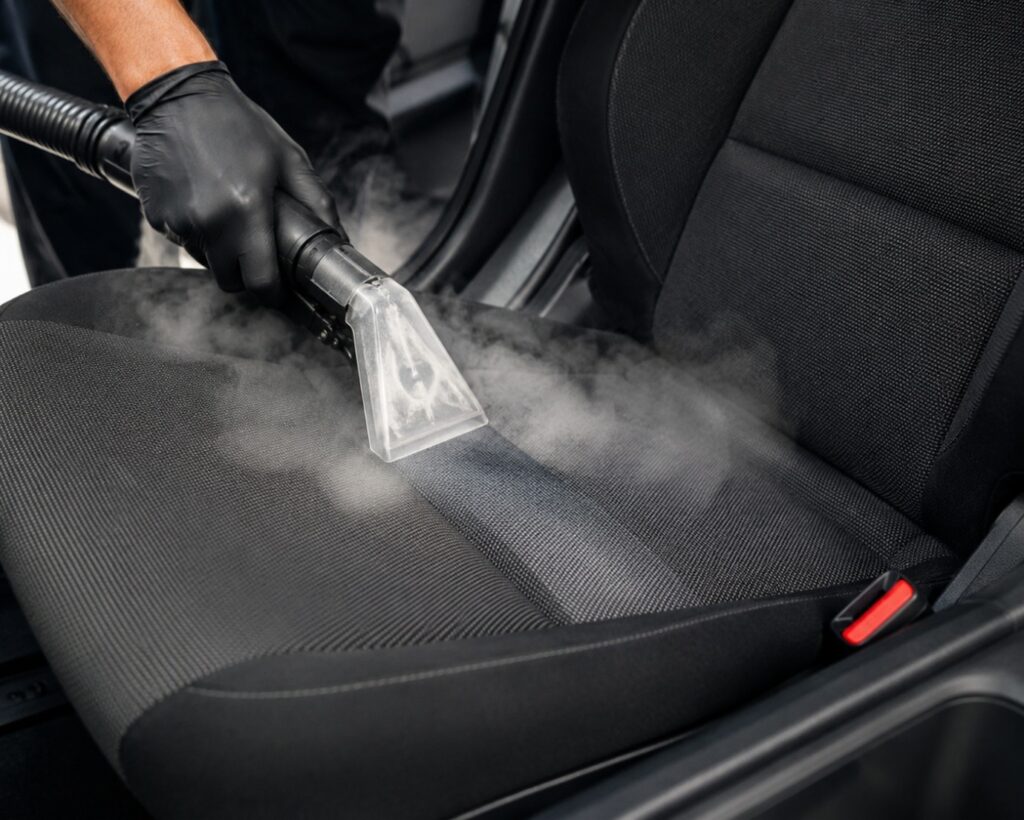
Overview: Steam cleaning helps protect car seat upholstery by removing deep dirt, bacteria, and residue without harsh chemical overload. This blog explains how steam supports fabric elasticity, reduces wear, improves resale value, and extends interior life. You will also learn safe steam-cleaning practices, common mistakes, and why professional detailing delivers stronger long-term protection for luxury and daily-use vehicles alike.
Coffee stains. Pet hair buried deep in the seams. Sweat marks on leather bolsters. Kids dropping snacks like confetti. Your car seats take a beating every single day. Yet most damage does not happen overnight. It builds slowly, layer by layer, until the upholstery starts cracking, fading, or smelling stale.
That is where how to clean car seats with steam cleaner methods change the game. Steam cleaning is not just about making seats look fresh. It directly affects durability, fabric strength, and long-term interior value.
And here is the surprising part. One wrong steam cleaning method can shorten upholstery life faster than neglect itself.
Why Steam Cleaning Works Better Than Heavy Chemical Cleaning
Most traditional upholstery cleaners leave residue behind. At first, the seats look spotless. A few weeks later, dust sticks faster, fabrics stiffen, and leather loses flexibility.
Steam works differently.
High-temperature vapor lifts dirt from deep inside the fibers while using minimal moisture. That means fewer chemicals soaking into fabrics or leather coatings. Over time, this helps maintain softness and elasticity.
When you clean car seats with steam cleaner, you reduce the risk of chemical buildup that slowly weakens stitching and fabric backing. Think of it like washing your skin with mild soap instead of industrial detergent every week.
Small difference. Huge long-term effect.
How Steam Protects Fabric Elasticity Over Time
Car upholstery stretches constantly. Every time you sit, shift, or slide across the seat, the material flexes. Dirt particles trapped inside fabrics act like tiny blades during that movement.
Sounds dramatic. It is true.
Steam loosens and removes those abrasive particles before they grind against the fibers. This matters especially for luxury interiors, perforated leather, Alcantara, and premium synthetic blends.
A well-maintained seat keeps its shape longer. The cushioning feels firmer. The seams stay tighter. Even the texture looks newer.
That is one reason professional detailers often recommend how to clean car seats with steam cleaner approaches for long-term preservation instead of repeated chemical scrubbing.
But there is a hidden risk most car owners never notice until it is too late.
The Biggest Steam Cleaning Mistake That Damages Upholstery
Too much heat.
Too much moisture.
Too much pressure.
Steam cleaning is precise work. Upholstery materials react differently depending on age, condition, and fabric type. Overheating leather can dry protective oils. Excess moisture trapped beneath foam cushions may lead to mold growth later.
This is why professional interior sanitization matters. Skilled technicians adjust steam flow, extraction speed, and temperature based on the seat material.
A cheap handheld machine from a retail shelf may clean surface dirt. It rarely protects the seat structure underneath.
That difference shows up years later when resale inspections begin.
Can Steam Cleaning Improve Vehicle Resale Value? Yes — And Buyers Notice Fast
A worn interior scares buyers faster than minor exterior scratches. Seats tell the real story of how a vehicle was treated.
Creased leather. Dingy cloth seats. Lingering odors. These details lower perceived value instantly.
Steam cleaning helps preserve:
- Seat color consistency
- Stitching condition
- Foam firmness
- Fabric texture
- Interior smell
When buyers enter a vehicle with fresh, sanitized upholstery, the cabin feels newer. That emotional reaction matters more than people admit.
Dealerships already understand this. Many restoration-focused detailers use steam cleaning car interiors before resale photography because cleaner upholstery improves presentation and buyer trust immediately.
It is similar to staging a home before selling it. People pay more when a space feels cared for.
Why Steam Cleaning Matters for Families and Pet Owners
Pet owners face a different problem. Hair, dander, oils, and odors sink deep into upholstery layers. Families deal with juice spills, food stains, and bacteria from constant use.
Surface wipes barely touch the issue.
Steam reaches into seams, stitching lines, and foam edges where dirt hides. Since the process uses lower chemical levels, it is often safer for children and pets compared to aggressive cleaners.
That matters inside enclosed cabins where chemical odors linger for days.
Professional cleaning car seats with steam cleaner methods also reduce moisture retention, which helps prevent mildew smells during humid months.
And if you drive a luxury vehicle, preserving interior air quality becomes even more important because premium materials absorb odors faster than standard cloth seats.
Steam Cleaning and Leather Seats: Friend or Enemy?
This question comes up constantly.
Steam is safe for leather when used correctly.
Professional detailers never blast direct steam aggressively into leather surfaces. Instead, they use controlled passes combined with microfiber extraction and leather conditioning afterward.
The goal is simple:
Remove contaminants without stripping protective oils.
Done properly, steam helps maintain leather flexibility and slows cracking. Done poorly, it can leave the surface dry and brittle.
That is why restoration-grade detailing follows a full preservation process instead of basic cleaning alone.
What Makes Professional Steam Cleaning Different?
Professional detailing is not just stronger cleaning equipment. It is controlled preservation.
Experienced technicians inspect:
- Fabric age
- Leather coating condition
- Previous chemical damage
- Moisture sensitivity
- Heat tolerance
Then they tailor the cleaning process accordingly.
This protects high-end interiors from accidental damage while delivering deeper sanitization. It also improves long-term wear resistance because contaminants are removed before they break down fibers permanently.
A quick driveway clean may save money today. A professionally preserved interior protects thousands in vehicle value later.
That trade-off matters more than most owners realize.
How Often Should You Steam Clean Car Seats?
For daily drivers, every four to six months works well.
Families with children or pets may need quarterly interior steam treatments. Luxury and performance vehicles benefit from scheduled maintenance because premium upholstery materials wear differently under heat and friction.
The key is consistency.
Waiting until seats look dirty usually means contaminants have already settled deep into the fibers. Regular steam maintenance prevents long-term damage before it becomes visible.
Conclusion
Steam cleaning is not just cosmetic maintenance. It is upholstery preservation. Done correctly, it reduces chemical exposure, protects fabric elasticity, improves wear resistance, and helps maintain resale value for years.
More importantly, it keeps your vehicle interior healthier, fresher, and structurally stronger under daily use.
We, at XLNC Auto Beauty help restore, sanitize, and protect vehicle interiors with precision steam detailing built for lasting upholstery preservation. Connect with us at – xlncautobeauty@gmail.com or call us now: (510)-467-8404!
FAQs
1. Does steam cleaning remove bad smells from car seats?
Yes. Steam breaks down odor-causing bacteria trapped inside upholstery fibers and foam layers, helping interiors smell cleaner without heavy fragrances.
2. Is steam cleaning safe for luxury car interiors?
Yes, when handled professionally. Controlled steam settings protect delicate leather, Alcantara, and premium fabrics from unnecessary heat or moisture stress.
3. Can steam cleaning damage leather seats?
Improper steam use can dry leather surfaces. Professional detailing balances temperature, pressure, and conditioning to protect leather flexibility and finish.
4. How long do car seats take to dry after steam cleaning?
Most professionally steam-cleaned seats dry within two to four hours, depending on humidity, airflow, and upholstery material.
5. Does steam cleaning help maintain resale value?
Yes. Clean, odor-free, well-preserved interiors create stronger buyer confidence and improve the perceived condition of the entire vehicle.