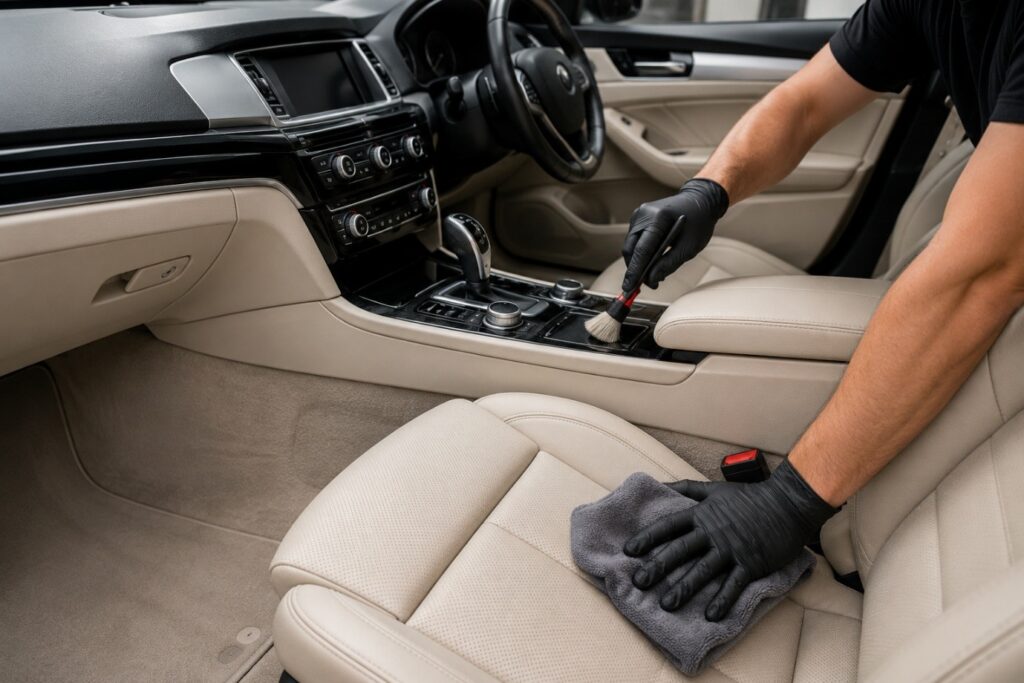
Overview: Upholstery materials directly affect interior detailing costs because each surface requires different cleaning methods, products, and skill levels. Leather needs conditioning, Alcantara requires delicate handling, fabric traps stains deeply, and vinyl depends on UV protection. This blog explains how material type changes labor time, pricing, long-term maintenance, and vehicle value while helping car owners choose the right professional detailing service.
A stained fabric seat and cracked leather trim may sit inside the same car, yet the cleaning bill can look wildly different. That surprises many owners. One detailer spends 45 minutes. Another spends four hours with specialty tools and low-moisture cleaners. Suddenly, how much does interior car detailing cost becomes a serious question instead of a casual search.
The truth is simple. Your upholstery decides the labor, chemicals, risk level, drying time, and protection process. One wrong cleaner can fade Alcantara. Too much moisture can damage foam padding. Cheap shortcuts often leave behind stains, odors, or worse — permanent wear. And there is one material most owners accidentally destroy during DIY cleaning. More on that shortly.
Why Upholstery Material Changes Detailing Prices So Much
Interior detailing is not just vacuuming and wiping surfaces. Different materials react differently to heat, moisture, friction, and chemicals. That changes the entire cleaning strategy.
Leather needs pH-balanced cleaners and conditioning. Alcantara requires low-friction brushing and moisture control. Fabric traps deep stains and odors. Vinyl resists spills better but still needs UV protection.
This is why how much does interior car detailing cost can vary from a basic service charge to premium restoration pricing. The material dictates the process. The process dictates the time. Time drives the cost.
Leather Interiors: Premium Look, Premium Care
Leather looks sharp, smells rich, and raises resale value fast. But it is also sensitive. Heat dries it out. Harsh cleaners strip oils. Aggressive scrubbing creates cracks that spread like dry earth.
Professional leather detailing usually includes vacuuming seams, steam cleaning, pH-safe treatment, conditioning, and UV protection. Higher-end vehicles may also need dye correction or matte-finish restoration.
That extra care increases the car detailing cost because the margin for error is tiny. One bad chemical can leave discoloration that cannot be reversed.
Think of leather like your skin during winter. Skip hydration long enough, and damage starts quietly.
Alcantara Needs Precision, Not Pressure
Alcantara confuses many car owners. It looks like suede but behaves differently. Rub it too hard and the fibers flatten. Use too much water and staining spreads deeper.
This is where inexperienced detailing becomes risky.
A trained technician uses soft brushes, microfiber towels, controlled moisture, and gentle extraction methods. Even drying techniques matter because heat can distort the texture.
Luxury sports cars and performance vehicles often use Alcantara on steering wheels, seats, and headliners. Cleaning those areas properly takes patience and skill. That is why the average cost of car detailing rises quickly for premium interiors.
And here comes the hidden issue most owners never notice until later. Dirty Alcantara traps skin oils deep inside the fibers. Over time, the material starts looking shiny instead of soft. Once that happens, restoration becomes much harder.
Fabric Upholstery: Lower Cost, Higher Stain Risk
Fabric interiors usually cost less to clean. The process is more forgiving, and replacement costs stay lower than leather or Alcantara. But fabric hides problems deep below the surface.
Coffee spills seep into padding. Pet hair tangles into fibers. Moisture creates odor pockets that standard vacuuming cannot remove.
Professional fabric detailing often involves shampooing, hot water extraction, enzyme treatment, and odor neutralization. Families and pet owners usually need deeper sanitation because bacteria and allergens build up over time.
Many people asking how much is car detailing underestimate fabric cleaning because stains often reappear days later if extraction is incomplete.
That happens because moisture remains trapped under the seat fabric. The top layer looks clean while the lower padding still holds dirt and odor. Like cleaning only the surface of a sponge.
Vinyl Interiors: Durable But Not Maintenance-Free
Vinyl handles daily wear well. That makes it popular in family vehicles, work trucks, and commercial fleets. It resists spills better than fabric and costs less to maintain than leather.
Still, vinyl has its weak spots.
Sun exposure causes fading and brittleness. Low-quality cleaners leave greasy residue. Overuse of silicone dressings creates an artificial shine that attracts more dust.
Professional vinyl detailing focuses on safe degreasing, UV protection, and crack prevention. The service is usually quicker, which helps control pricing. Yet neglected vinyl can still become expensive once restoration starts.
That is why asking only about how much does car detailing cost misses the bigger picture. Preventive care almost always costs less than repair work.
Why Experience Matters More Than Equipment
Two detailers can use the same extractor and get completely different results. Experience changes everything.
A trained professional reads the material first. They test cleaners in hidden spots. They adjust pressure levels, drying methods, and brush types based on age and wear.
That matters because modern interiors mix materials together. Leather bolsters may sit beside Alcantara inserts. Vinyl trim may surround delicate stitching. One-size-fits-all cleaning simply does not work anymore.
Good detailing protects value. Poor detailing quietly removes it.
The Hidden Cost Nobody Talks About
Cheap interior detailing often looks fine for one day. Then the problems show up.
White leather turns dull. Fabric smells return. Alcantara hardens. Adhesives weaken. Electronics near damp carpeting begin acting strangely.
That low upfront price suddenly becomes costly correction work.
Professional detailing is not only about appearance. It protects surfaces from long-term breakdown. For sellers and dealerships, that can increase resale appeal quickly. For busy professionals, it keeps the vehicle clean without losing work hours. For families, it creates a healthier cabin environment.
A properly detailed interior also feels different. Quieter. Fresher. Better maintained. Like walking into a clean hotel room instead of a rushed cleanup job.
Final Thoughts
Upholstery material directly shapes detailing time, product choice, labor intensity, and restoration risk. Leather demands conditioning. Alcantara requires delicate handling. Fabric needs deep extraction. Vinyl depends on protection against wear and UV damage.
The smartest approach is not chasing the cheapest service. It is choosing a detailer who understands material behavior and long-term preservation.
We at XLNC Auto Beauty restore interiors with material-specific methods that protect value, comfort, and long-term durability for every vehicle owner. To know more about the same, kindly check out xlncautobeauty@gmail.com or give us a call at (510)-467-8404!
FAQs
1.Does leather detailing cost more than fabric cleaning?
Yes. Leather requires specialized cleaners, conditioning products, and careful handling, which increases labor time and overall detailing costs.
2. Why is Alcantara difficult to clean?
Alcantara fibers flatten and absorb oils easily. Aggressive cleaning damages texture, making professional low-moisture cleaning methods necessary.
3. Can interior detailing remove pet odors completely?
Yes, if deep extraction and enzyme treatments are used. Surface cleaning alone usually leaves odor trapped beneath fabric padding.
4. How often should you detail a car interior?
Most vehicles benefit from professional interior detailing every four to six months, depending on driving habits, pets, and climate exposure.
5. Does interior detailing improve resale value?
Yes. Clean, well-maintained upholstery improves buyer confidence and helps vehicles appear newer and better cared for.